
The Player Development Group (PDG) is the first stage of the Sale Sharks Academy pathway. It brings together players with the potential to develop into professional players.
The programme is designed to support long-term development rather than early performance. Players selected may not always be the most physically developed or dominant in their age group — we are identifying players with future potential and the ability to improve quickly in a high-performance environment.
The PDG feeds into the U17–U18 pathway and the Sale Sharks Senior Academy.
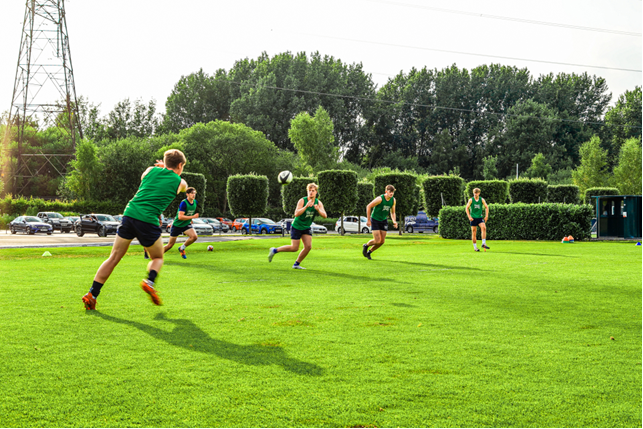
How Players Are Identified
Players can enter the pathway in several ways:
• Club and school nominations
• Academy scouting at matches and festivals
• Recommendations from trusted coaches within the region
If a coach believes a player should be considered outside of the nomination window, they are encouraged to contact the academy.
What We Look For In Players
At younger ages some players may stand out because they are currently bigger, stronger, or performing specific positional tasks (for example scrummaging dominance, lineout throwing or goal kicking).
While these skills are valuable within a team, our player identification is based on the Sharks DNA, which focuses on four key areas.
Creative Attacker
Players who can recognise and exploit space, using strong core skills to create attacking opportunities. This includes effective passing, running, kicking and decision-making under pressure.

Relentless Athlete
Players with the potential to develop the speed, agility and work capacity required for the modern game.

Defensive Warrior
Players who consistently deal with attacking threats. They show repeatable tackle technique, work hard to regain possession and react quickly in defensive situations.

Best Teammate
Players who contribute positively to the team environment. They communicate well, take responsibility and demonstrate strong preparation and commitment.
As the game continues to evolve, skills like speed, agility, handling and decision-making are increasingly important across all positions, not just traditional backline roles. We are therefore looking for players who show these qualities regardless of the position they currently play.
We also provide a free online course which goes deeper into what we look for, which can be accessed here: https://canvas.instructure.com/enroll/B87XWT
Player Nominations
Clubs and schools are invited to nominate players during the annual nomination window.
Players nominated should consistently demonstrate the potential to influence games against strong opposition and show a high rate of skill development linked to our Sharks DNA.
To ensure a fair and manageable process, the following guidelines apply:
• Each club may submit nominations through one designated contact only
• Schools must submit nominations using an official school email address
• Nominations must come directly from a club coach or school staff member
Nomination limits per organisation are:
• Up to 5 players at U15
• Up to 2 players at U16
Clubs and schools will receive nomination guidance and submission links during the nomination window.
• Multiple nominations from the same club age group via different individuals will not be accepted.
• Nominations submitted from personal email accounts claiming to represent a school will not be accepted.
To complete a nomination form for the 26/27 season – please follow this link: https://tally.so/r/NpVvlB
Assessment Process
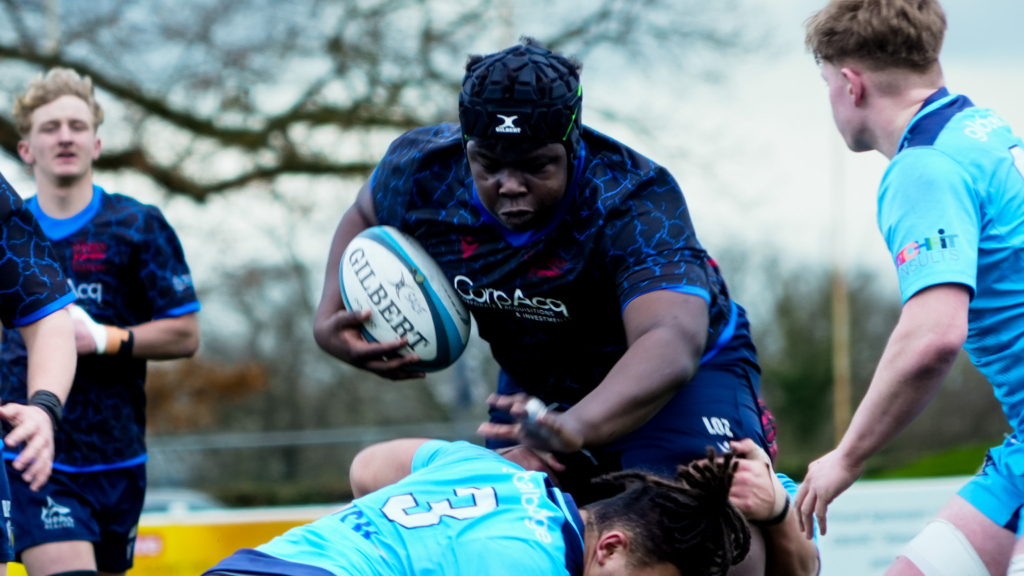
Players nominated to the PDG are invited to assessment sessions at their local centre.
Assessment sessions are designed to observe players in game-based environments.
In sessions we look for evidence linked to three areas of the Sharks DNA:
• Creative Attacker – recognising and exploiting space, using core skills and decision-making to influence the game
• Defensive Warrior – dealing with attacking threats through effective tackling, defensive awareness and competing for possession
• Relentless Athlete – the speed, agility and work capacity required for the modern game
These areas help us understand how a player impacts the game both with and without the ball.
Best Teammate behaviours — such as communication, preparation and responsibility — are also important, but they act as supporting behaviours rather than the primary selection criteria. In simple terms, players must first show they can influence the game, with strong behaviours helping them maximise their development within the programme.
Programme Structure
The PDG runs within the following delivery windows:
U15: September – May
U16: August – January
Sessions typically take place twice per month, with additional playing opportunities through aligned regional programmes.
Late Developers
Players develop at different rates. For this reason the pathway remains open throughout the season.
If a coach believes a player has the potential to enter the programme at a later stage, they are encouraged to contact the academy.
FAQ’s
No.
The Sale Sharks Player Development Group operates within specific geographical regions as part of the RFU Academy system. Players should be involved with the academy responsible for the region where they live and play their rugby.
If your son lives outside the Cheshire or Lancashire region, they should contact the academy for their local area, who will be responsible for identification and development opportunities.
Team performance and academy identification are not the same thing.
A player may be very effective within their current team structure, but the academy looks for transferable skills and long-term development potential. Selection decisions consider factors such as decision-making, skill execution under pressure, athletic potential and rate of improvement.
Being the strongest player in a team or league does not automatically indicate future elite potential.
Those skills are valuable within a team, but the academy primarily evaluates core skills and athletic potential.
At younger ages the focus is on players who demonstrate:
- decision-making
- skill execution under pressure
- speed and agility potential
- adaptability within the game
These qualities tend to transfer more effectively into the professional game environment.
Physicality is an important part of the professional game, but size at 14–16 is not a reliable indicator of future performance.
During adolescence, players mature at very different rates. Some players are early developers, while others may grow significantly later. Because of this, players who are currently bigger or stronger are not always the players who go on to succeed at senior level.
Within the pathway we consider physical potential alongside skills, athleticism and game impact, rather than selecting players purely based on their current size.
Where appropriate, we may also identify players who show the potential to develop the physical profile required for the professional game, particularly when this is combined with strong skills and decision-making. To help inform this, the academy may use growth and maturation indicators such as predicted adult height alongside game observations.
Ultimately, selection decisions are based on the overall player profile, not any single factor.
Assessment decisions are made by academy staff based on multiple observations across different environments.
Due to the volume of players involved, individual selection decisions cannot be formally reviewed.
Players continue to be observed throughout the season and may be identified again at a later stage if their development progresses.
Player development is not linear.
Each year players are reassessed against the demands of the next stage of the pathway. Some players continue to progress, while others may leave the programme.
Players who are not retained may still continue developing successfully through club, school and other performance environments.
No.
Players develop at different rates and the pathway remains open.
Many players are identified later in their development once their physical and technical profile becomes clearer.
Academy staff continue to watch games across the region throughout the season.
Contact
For nomination enquiries outside of the nomination window relating to U15 and U16 players in Cheshire or Lancashire, please contact:
Gerard Hall | Foundation Phase Talent ID: gerard.hall@salesharks.com
Please note this contact is only for U15 and U16 nominations within the Cheshire and Lancashire region. Enquiries relating to other age groups or regions may not receive a response.
